
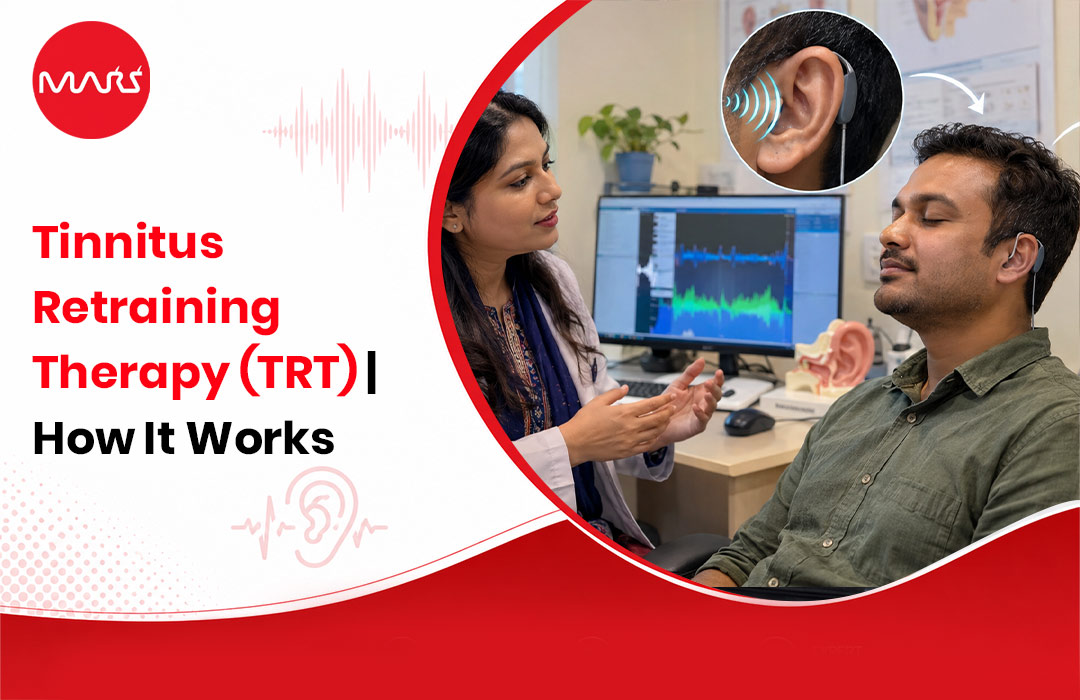
If you hear ringing, buzzing, hissing, or humming that no one else can hear, you are not alone. Tinnitus affects millions of people worldwide, and many families in Dhaka, Chattogram, Sylhet, and across Bangladesh live with it quietly. Most people are told “you just have to live with it,” but that is not the whole story. Tinnitus retraining therapy (TRT) is a structured, evidence-informed approach that helps your brain stop reacting to the sound as a threat.
At MARS Hearing & Health, the largest network of hearing care centers in Bangladesh, we see how tinnitus affects sleep, focus, and mood. This guide explains what tinnitus retraining therapy is, how it works, and whether it could be right for you.
What Is Tinnitus Retraining Therapy?
Tinnitus retraining therapy is a long-term management method developed to help people habituate to tinnitus. Habituation means your brain learns to treat the sound as unimportant background noise, the way you stop noticing a ceiling fan after a few minutes.
TRT does not claim to “switch off” the sound. Its goal is to reduce how intrusive, stressful, and distracting tinnitus feels, so it no longer controls your day or your sleep.
How Does Tinnitus Retraining Therapy Work?
Tinnitus is not only an ear problem. The sound may begin in the auditory system, but the distress comes from how the limbic system (emotion) and autonomic nervous system (stress response) react to it. When the brain labels tinnitus as dangerous or annoying, you notice it more, which raises anxiety, which makes it louder. TRT breaks this loop with two pillars:
1. Directive Counseling
An audiologist explains what tinnitus is, why it happens, and why it is not harmful. Much of the fear around tinnitus comes from not understanding it, so education alone can lower anxiety. Counseling helps you:
- Understand that tinnitus is not a sign of a dangerous disease in most cases
- Change negative thoughts and reactions to the sound
- Build confidence in managing flare-ups
2. Sound Therapy
Sound therapy uses soft, low-level background sound so tinnitus stands out less against the silence. The sound should not completely mask the tinnitus. It should sit just below or beside it, so your brain can gradually learn to tune it out. Sound can come from:
- Hearing aids with built-in tinnitus sound support
- Wearable sound generators
- Calm environmental sound such as a fan, soft nature sounds, or low-volume music
Who Can Benefit From TRT?
Tinnitus retraining therapy may help people who:
- Have persistent tinnitus lasting more than a few months
- Find tinnitus affects sleep, concentration, or mood
- Also have hearing loss along with tinnitus
- Feel anxious, frustrated, or hopeless about the ringing
If your tinnitus is sudden, only in one ear, pulsing with your heartbeat, or comes with dizziness or sudden hearing drop, see a doctor promptly. These signs need medical evaluation first.
How Long Does Tinnitus Retraining Therapy Take?
TRT is gradual. Many programs run for about 12 to 24 months, with regular follow-ups to adjust sound levels and reinforce counseling. Some people notice better sleep and less distress in the first few months, while full habituation takes longer. Consistency matters more than speed: wearing your sound support daily and attending follow-up sessions makes a real difference.
The Link Between Hearing Loss and Tinnitus
A large number of people with tinnitus also have some degree of hearing loss, often unnoticed. When the ear sends weaker signals, the brain may “turn up the gain,” which can create or intensify phantom sound. That is why a hearing test is the first step in any tinnitus plan.
Treating the underlying hearing loss with well-fitted hearing aids often brings tinnitus relief. Amplified everyday sound naturally covers the ringing and gives the brain real sound to focus on. Modern hearing aids from brands available at MARS, including Phonak, Starkey, Rexton, and NuEar, offer advanced features such as rechargeability, Bluetooth streaming, and AI-integrated sound processing, and many include tinnitus sound options. You can explore the range on our hearing aids page.
What to Expect at Your Tinnitus Appointment
A good tinnitus consultation usually includes:
- Case history: when it started, which ear, what it sounds like, and what makes it worse
- Comprehensive hearing test (audiogram): to check for hearing loss that may be driving tinnitus
- Tinnitus assessment: discussing loudness, pitch, and how much it affects your daily life
- Counseling and a personalized plan: which may include hearing aids and sound therapy
Not sure how to read your results? Our simple guide on reading an audiogram can help you understand your hearing test.
Everyday Habits That Support Tinnitus Therapy
TRT works best alongside healthy habits:
- Avoid complete silence, especially at bedtime. Use a fan or soft sound.
- Protect your ears from loud noise such as headphones at high volume, generators, and construction sites.
- Manage stress through breathing exercises, prayer, walking, or relaxation.
- Limit excess caffeine and nicotine, which can worsen tinnitus in some people.
- Prioritize sleep and keep a regular routine.
- Manage blood pressure and diabetes, as general health affects hearing health.
Why Choose MARS Hearing & Health?
MARS Hearing & Health is driven by one belief: everyone should hear well to live well. We are the exclusive dealer of NuEar, Starkey, Phonak, and Rexton hearing aids in Bangladesh, and we also provide hearing aid accessories for maintenance and a healthy hearing lifestyle. Our mission is to make quality hearing care accessible and affordable. Learn more about MARS, see our full hearing care services, or find a branch near you.
Frequently Asked Questions
What is tinnitus retraining therapy?
Tinnitus retraining therapy is a long-term program that combines counseling and sound therapy to help your brain get used to tinnitus so it becomes less bothersome.
Does TRT cure tinnitus?
TRT is not a cure. It aims to reduce distress and awareness through habituation. For many people, tinnitus becomes a minor background sound.
How long does TRT take to work?
Most programs run 12 to 24 months, though some people notice improvement in sleep and stress earlier.
Can hearing aids help with tinnitus?
Yes. If tinnitus comes with hearing loss, hearing aids can improve everyday sound and reduce how noticeable the ringing is.
Is tinnitus dangerous?
Usually not, but sudden, one-sided, or pulsating tinnitus with dizziness or hearing drop should be checked by a doctor quickly.
Where can I get tinnitus help in Bangladesh?
Book a hearing evaluation with MARS Hearing & Health to start a personalized plan.
Take the First Step Toward Quieter Days
You do not have to accept constant ringing as your normal. Tinnitus retraining therapy gives your brain the tools and time to relax around the sound. The first step is understanding your hearing. Contact MARS Hearing & Health today, or visit our homepage to book your appointment.
